Capture
Record the spoken encounter using a microphone.

Clinical documentation is an essential part of every patient visit. AI medical scribes assist by capturing conversations and preparing structured clinical note drafts.
Explore how AI-assisted documentation works, what features to look for, and why clinician control matters.
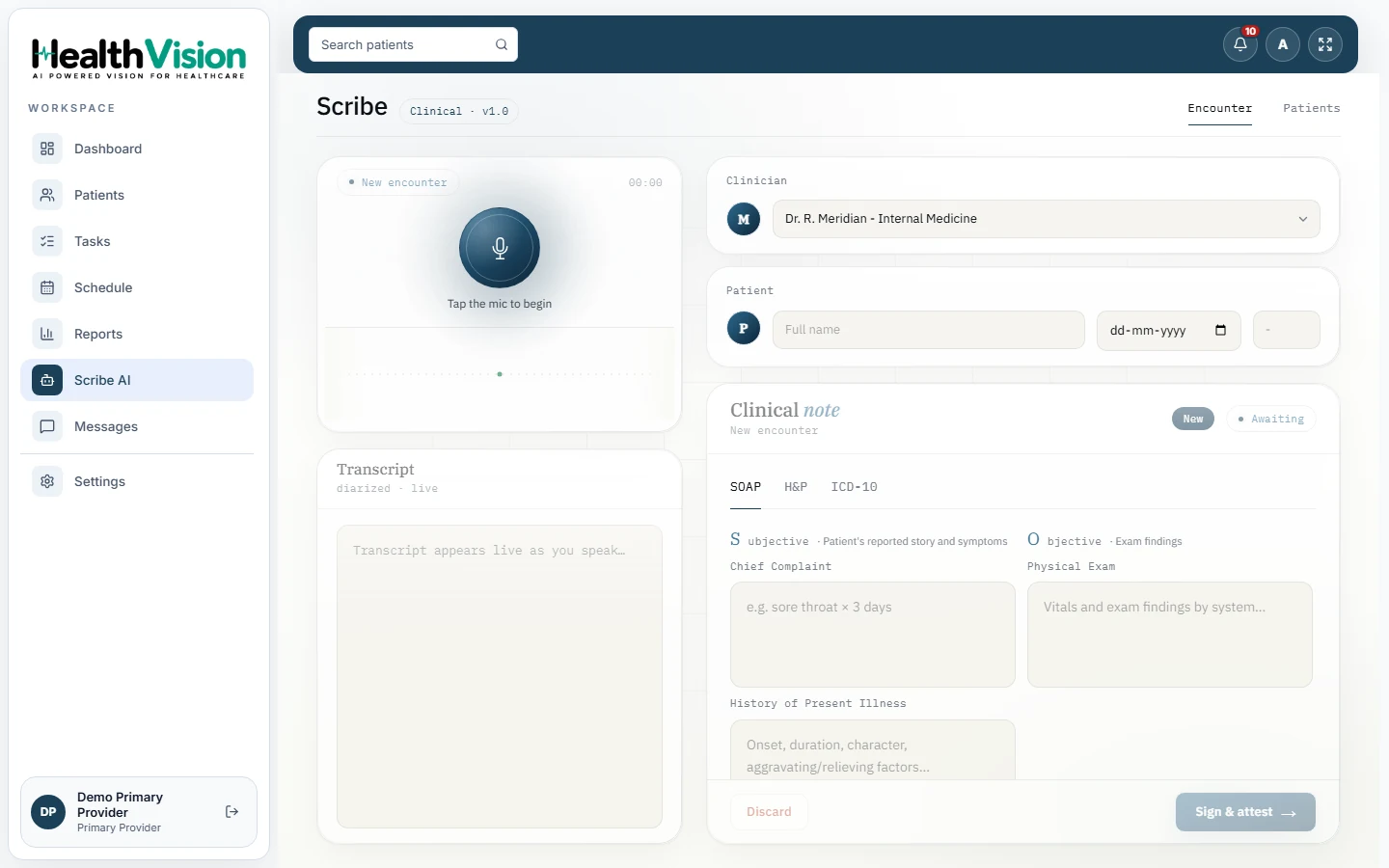
An AI medical scribe uses speech transcription and AI-assisted documentation to turn spoken clinical encounters into note drafts. Instead of starting every note from scratch, clinicians can review, edit, and finalize generated documentation.
Record the spoken encounter using a microphone.
Generate structured clinical note drafts.
Check, edit, and sign the documentation.
Follow the clinical conversation as it is transcribed.
Distinguish speakers within the encounter transcript.
Work with SOAP and H&P documentation formats.
Access AI-assisted documentation within the patient encounter.
Review, edit, sign, or discard the drafted note.
The right workflow supports review and final sign-off inside the patient's encounter.
Choose the patient and clinician.
Start the microphone and follow the live transcript.
Review drafted clinical documentation in the supported SOAP and H&P views.
Check the note for clinical accuracy and completeness.
The clinician signs and attests to the documentation or discards the draft.
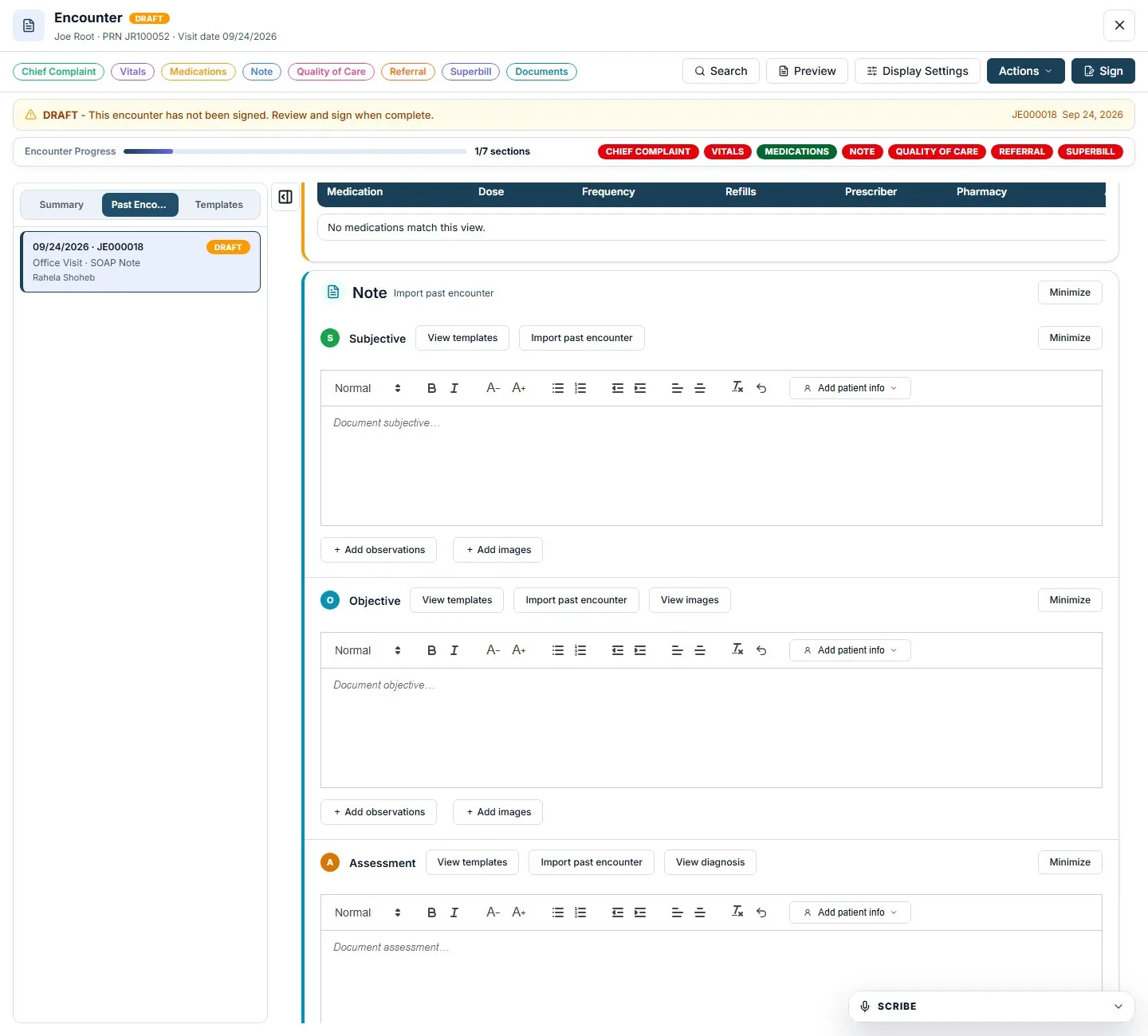
When evaluating an AI medical scribe, consider how it fits into your daily clinical workflow.
Select the questions you have covered, then review anything still outstanding with the team.
HealthVision Scribe AI supports spoken encounter transcription, structured note drafting, and clinician-reviewed documentation within the EHR.
Explore how AI assistance can become part of your clinical workflow.